


Summer Pests in Australia and How to Help Prevent Them
Table of Contents
During summer, pest activity in Australia increases significantly. As the warm weather of the season takes hold, you’ll likely notice more pests inviting themselves into your home. This is not only annoying but can also pose a serious risk to your family’s health.
Keep reading and we’ll let you know the most common summer pests in Australia, why pests are more active during the summer months and what you can do to help prevent them around your home.
If you’re currently having trouble with pests, get in touch with our friendly team to find out more about our pest control treatments.
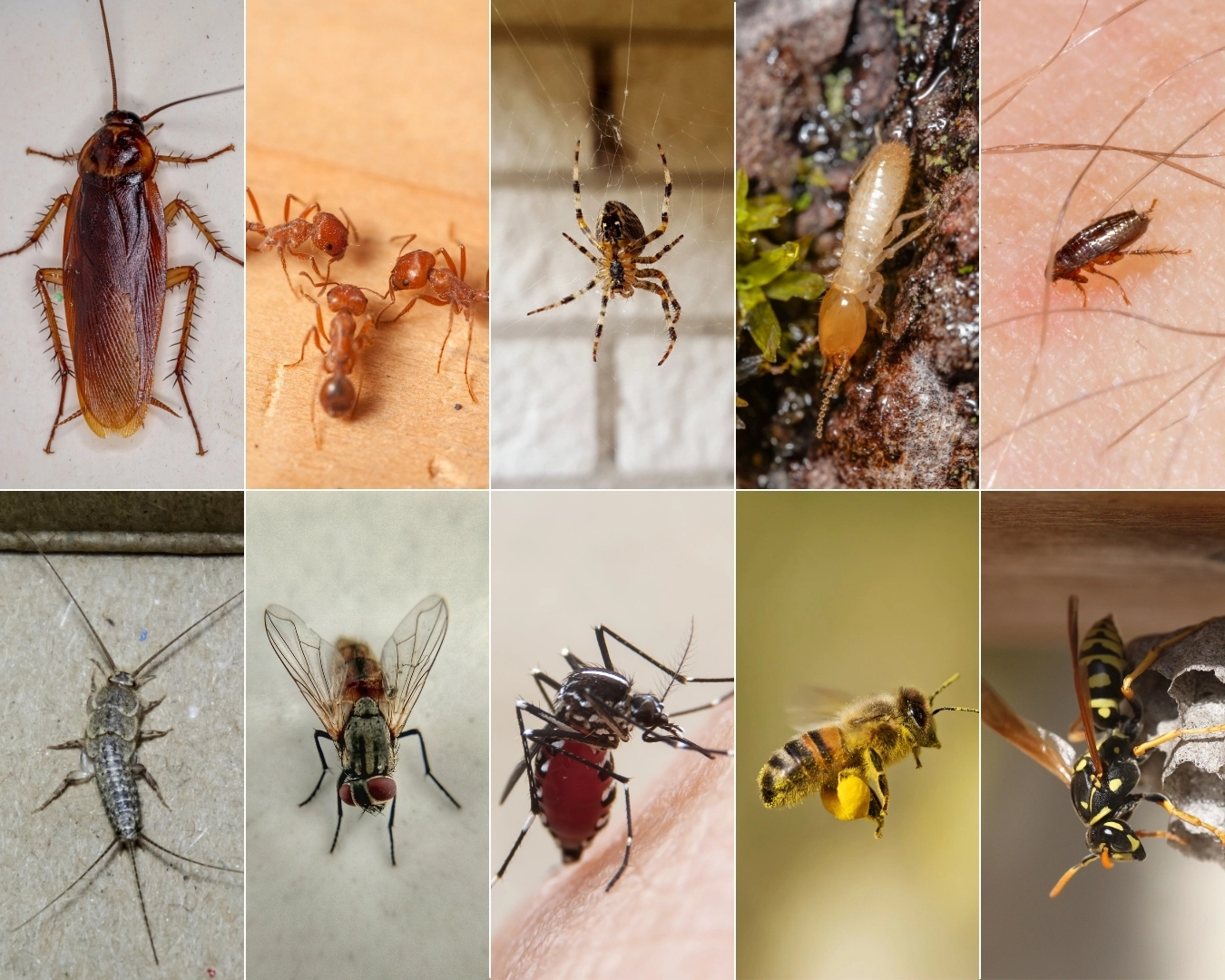 Left to right: Cockroaches, ants, spiders, termites, fleas, silverfish, flies, mosquitoes, bees and wasps
What are the most common summer pests in Australia?
Summer is peak pest season in Australia and is the time of year when household pests you’re familiar with become most active. Here are the most common summer pests to look out for around your home:
- Cockroaches
- Ants
- Spiders
- Termites
- Fleas
- Silverfish
- Flies & Mosquitoes
- Bees & Wasps
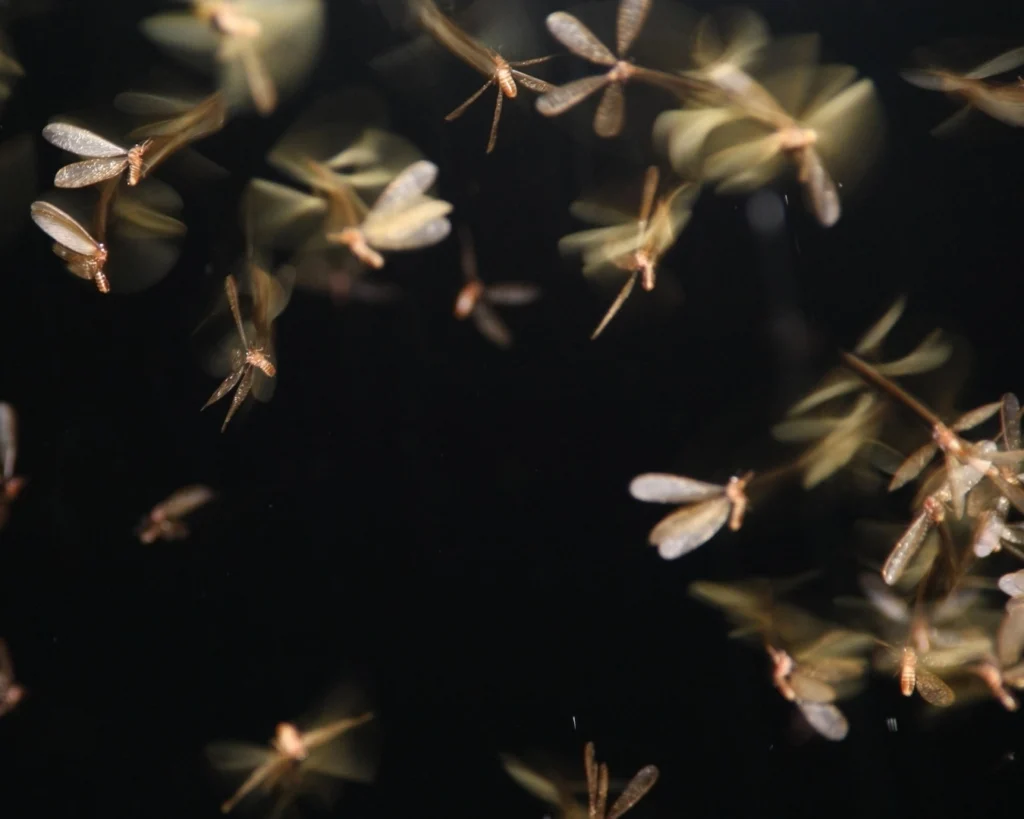 Flying termites (termite alates) swarming
Flying termites during summer
During the warmer months of spring and summer, when temperature and humidity conditions are just right, flying termites swarm and reproduce.
Their sudden appearance is one of the strongest warning signs that a mature termite nest is nearby. To learn more about flying termites and whether you should be worried about them, read our article.
Why are pests more active during summer?
Pests are more active during summer because of the favourable conditions the season brings. Here are the reasons why pest activity increases:
Warmer temperatures
Cold-blooded insects such as ants, cockroaches, fleas and mosquitoes rely on their environment to regulate their body temperature. When the weather warms up in summer, the metabolism of these pests speeds up. A faster metabolism results in these insect pests being able to grow, feed and reproduce much faster than during other times of the year.
Pest offspring also experience metabolic acceleration. As a result, multiple generations develop in a shorter period of time. This compounding effect leads to a surge in visible pest activity around your home.
Increased humidity and rainfall
Summer brings higher levels of humidity and more rainfall, particularly in regions above the Tropic of Capricorn. Pests such as termites, cockroaches and silverfish benefit greatly from the added moisture, helping them to thrive through the summer months.
Human behaviour changes
During summer, people change their behaviours. Outdoor dining becomes more frequent, gardens are watered more often, and windows and doors are left open to improve ventilation. These activities give pests more access to food and water providing better opportunity to survive and infest your home.
How can I prevent summer pests around my home?
Summer pest activity can’t be avoided entirely, but the chances of a serious pest infestation can be greatly reduced if you follow some simple steps.
- Seal off entry points around your doors, windows and vents to block pest access
- Keep your kitchen clean, store food in sealed containers and empty bins regularly
- Remove any standing water from plant saucers, buckets and pet bowls
- Keep your garden trimmed and tidy, so pests can’t shelter or hide
- Fix water leaks and make sure areas don’t remain damp
- Make sure all rubbish bins are kept closed and secure
- Look out for signs of pest activity and take action before it becomes a bigger problem
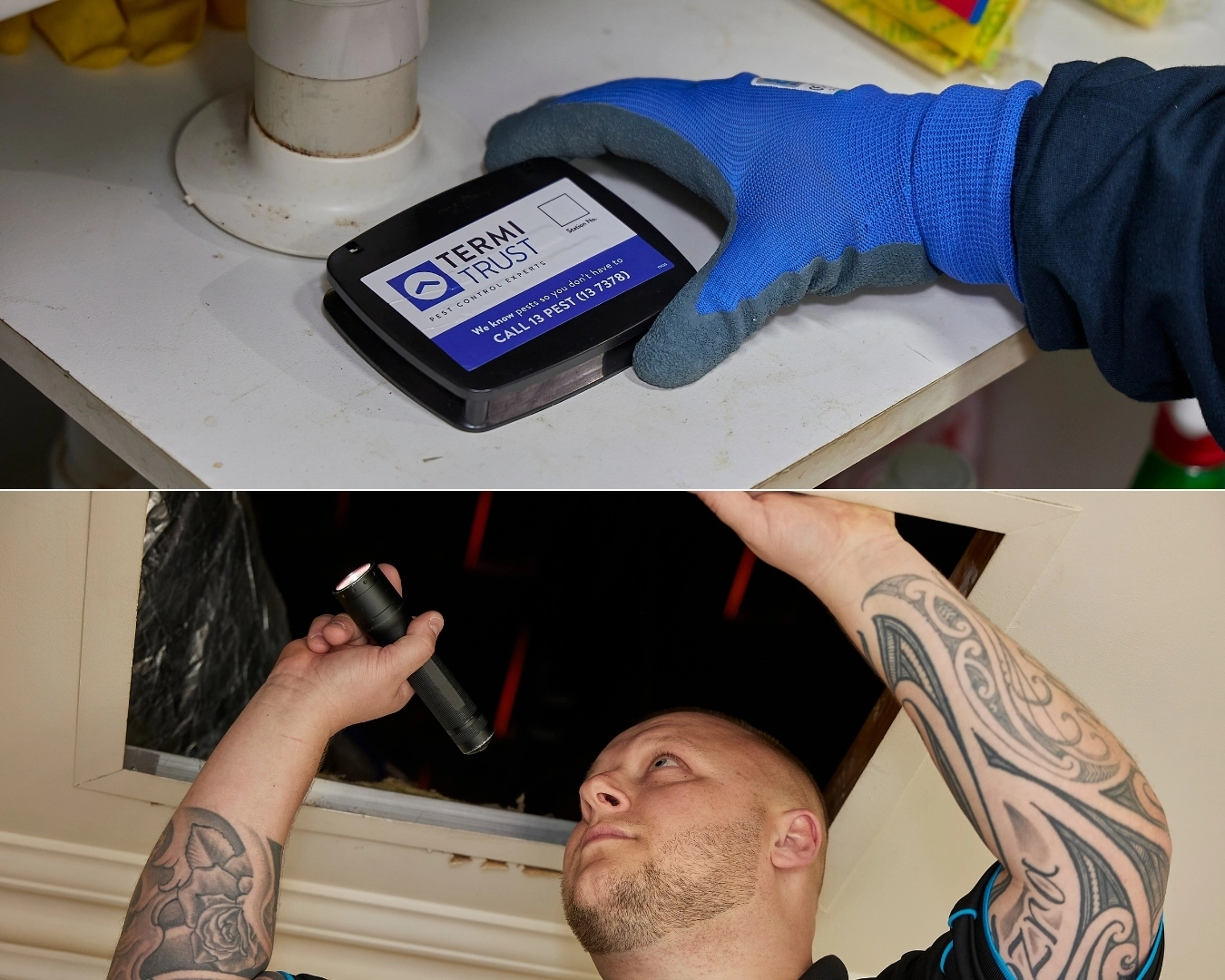 Cockroach monitoring station placed in a cupboard and a pest technician inspecting a roof cavity for pest activity
When should I get professional pest control?
Even in the cooler months, when pests aren’t at their most active, it’s a good idea to a book professional pest treatment for your home when you:
- First notice pests in your home
- Find signs of pest activity, such as termite mud tubes or rodent droppings
- Aren’t sure of the type of pest you’ve seen
- Want to be proactive in protecting your home
P.S. It’s also a good idea to book an annual pest treatment in advance, as professional pest controllers can get very busy in the warmer months of the year.
Conclusion
Summer pests are almost unavoidable in Australia and at some point, you’ll likely have to deal with them.
The good news is that with some simple steps, you can help prevent pest problems around your home. However, it’s best to book a professional pest control service when you first notice a problem, so that it can be taken care of before it gets worse.
If you’ve noticed signs of pests or just want to stay ahead of potential infestations, book a pest treatment with your local Termitrust Pest Control service centre. Our friendly team can help identify the problem and recommend the best pest treatment to keep your home healthy.
Frequently Asked Questions
Q. Why are pests more active in summer?
A. Pests are more active in summer because the increased heat and humidity of the season speed up their metabolisms, allowing them to grow, feed and reproduce faster than during cooler times of the year.
Q. What are the hardest pests to get rid of?
A. Termites, bed bugs and German cockroaches are among the hardest pests to get rid of, especially during peak pest season. These pests often hide in hard-to-reach places and typically need multiple treatments to be completely removed.
Q. Is it normal to have ants in your house during summer?
A. Unfortunately, it’s quite normal to have ants in your house during summer. Ant activity increases as the weather heats up and they can usually find a way inside to search for food and water.
Q. What season is best for pest control?
A. Spring and early summer are the best seasons for pest control, as treatments during these seasons target pests before they become their most active. However, pest control treatments are still beneficial year-round to help prevent infestations.
Q. How do you permanently get rid of pests?
A. Getting rid of pests permanently is a difficult task and is often unrealistic. However, when simple pest prevention methods are taken and pest control treatments are completed regularly, you’ll receive the best possible long-term results.