

What Exactly Are Timber Pests?
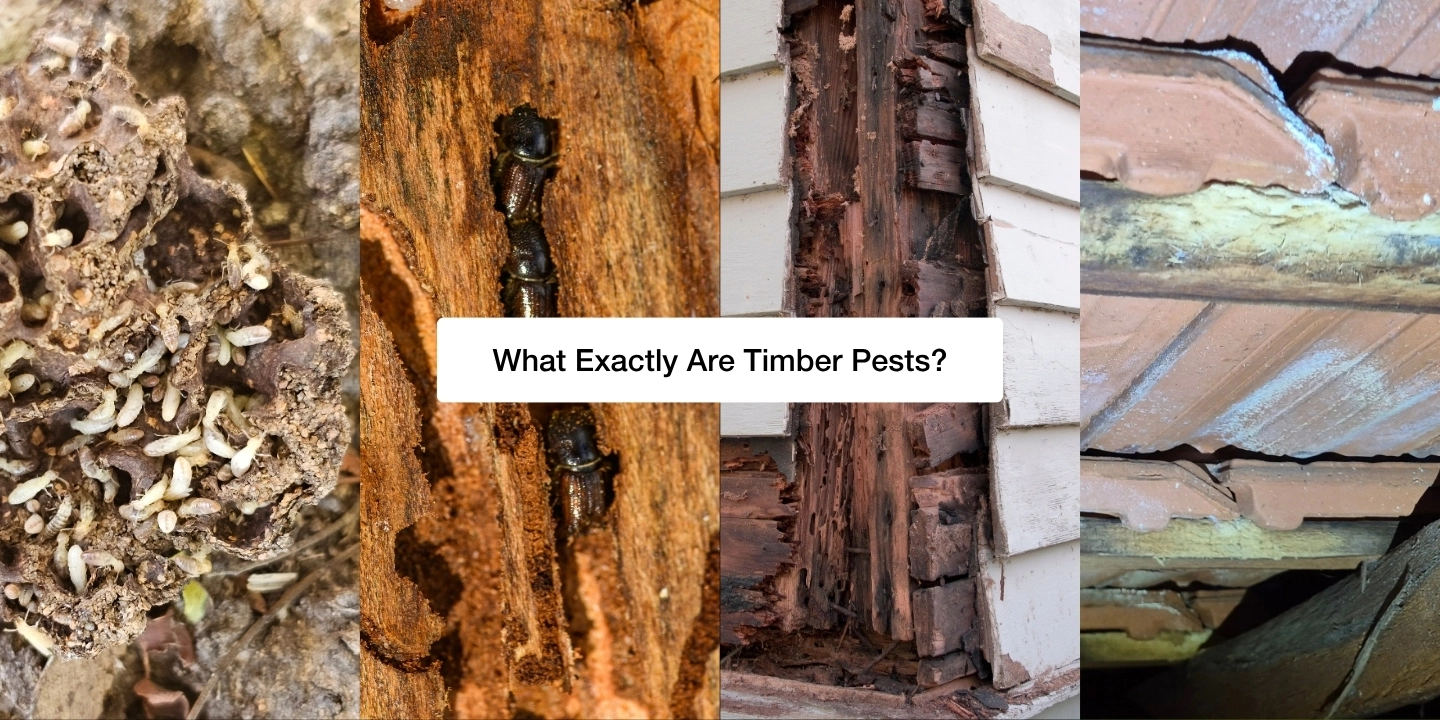
Table of Contents
- Why are timber pests a serious risk to buildings?
- Types of timber pests and the damage they cause
- How you can reduce the risk of timber pest infestation
- How to avoid buying timber pests
- Conclusion
- Frequently Asked Questions
Timber pests are organisms that damage timber by feeding on it, living within it or contributing to its deterioration over time. These pests weaken the structural integrity of timber in buildings and can impact everything from timber flooring and skirting boards, through to structural framing and roof beams.
In many cases, this damage develops out of sight, progressing within walls, subfloors and roof spaces long before it becomes visible. By the time signs of timber pest damage appear, the underlying issue may already be well established.
In this blog, you will find out what types of timber pests typically affect Australian properties, along with signs of their damage to look out for. We’ll also share with you useful information on how to reduce the risk of a timber pest infestation.
What you need to know
- Timber pests can damage timber flooring, skirting boards, structural framing, roof beams and other timber elements within a building
- Timber pest damage often develops out of sight in wall cavities, subfloors and roof spaces before visible signs appear
- Termites, timber borers, wood rot/wood decay fungi and chemical delignification can all weaken timber in different ways
- Common signs of timber pest damage include mud tubes, hollow-sounding timber, exit holes, frass, soft or brittle timber, fungal growth, deformed timber and white salt deposits
- Fixing moisture issues, improving ventilation, maintaining drainage, keeping timber clear of soil contact and arranging regular inspections can help reduce the risk of timber pest problems
Why are timber pests a serious risk to buildings?
Timber pests pose a serious risk to buildings because of the damage they can cause to structural timbers. If damage to these timbers continues and is left unchecked, serious safety issues, like structural collapse, could eventually occur.
Timber pest damage is often found in areas that are difficult to access or inspect, such as wall cavities, subfloors and roof voids. These spaces enable pest problems to develop without interruption, allowing damage to progress to critical levels before being discovered.
Types of timber pests and the damage they cause
Below are the four timber pests that our technicians commonly come across during a timber pest inspection. We’ve detailed what each pest is, along with some of the common signs of damage you should look out for.
 Many subterranean termites feeding on timber
Termites (white ants)
Termites, sometimes referred to as white ants, are the timber pest people are most familiar with. They feed on cellulose found in timber and can cause extensive damage to both decorative and structural timbers.
Subterranean termites are the most common type of termite in Australia, and they can cause serious financial damage to homes and commercial buildings. There are many species of subterranean termites, but generally, they are small, soft-bodied insects that are typically pale cream to light brown in colour.
Worker termites, who are responsible for feeding the other castes within the colony, enter buildings underground through soil. Once they have found a way inside a building, they hollow out any timbers they can find, leaving only a thin veneer of wood behind that can be easily crushed.
5 common signs of termite infestation:
- Mud tubes on vertical surfaces
- Mud buildup within cracks in timber
- Timber that sounds hollow when tapped
- Piles of dead flying termites or discarded wings
- Finding termite droppings (frass)
 Timber boring species of beetle eating timber
Timber borers
Timber borers are the larval stage of wood-boring beetles that cause damage by tunnelling through timber as they develop. This tunnelling weakens the timber from the inside out, often going unnoticed until visible exit holes appear.
While borers may not have the same reputation as termites, timber borer larvae can remain totally concealed for several years before moving into their next life cycle stage.
Generally, timber borer activity is typically more localised than termite damage, with many cases being historical rather than active, meaning not all damage requires treatment.
4 common signs of timber borer infestation:
- Small, round exit holes in timber surfaces
- Fine powder (frass) collecting beneath or around timber
- Weak or damaged timber in localised areas
- Tunnels visible within exposed timber
 Damage caused to timber by wood rot
Wood rot/wood decay fungi
Wood rot occurs when timber is exposed to elevated moisture levels over extended periods, allowing wood decay fungi to grow. The fruiting bodies of these microorganisms vary in size, shape and colour.
Timber decay fungi digest the cellulose and lignin in the wood. Over time, affected timber can become soft, brittle and prone to failure, particularly if the underlying moisture issue leading to its growth is not addressed. Leaks, poor drainage and inadequate ventilation are a few of the common moisture issues that enable wood rot.
4 common signs of wood rot/decay fungi infestation:
- Timber that feels soft, spongy or brittle
- Discolouration of timber
- A musty or damp odour in affected areas
- Visible fungal growth on or around timber
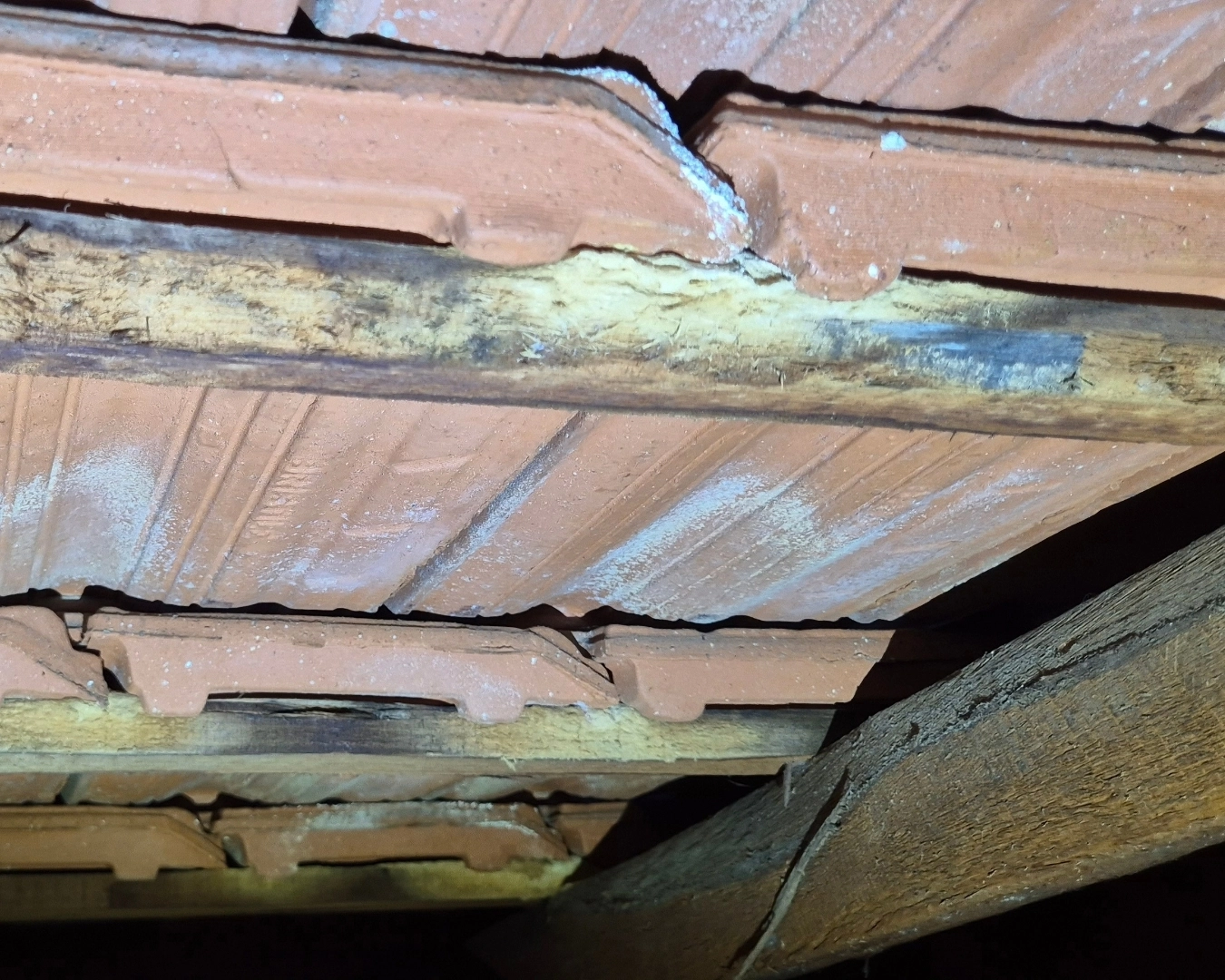
Chemical delignification affecting timber. Efflorescence (white salt deposits), a common sign of chemical delignification present on tiles
Chemical delignification
Chemical delignification is a deterioration process of timber where the lignin that binds wood fibres together breaks down due to exposure to airborne salts, pollutants or moisture.
Rafters and other roof timbers are particularly susceptible to chemical delignification. Over time, the process will cause timbers to lose their strength, making them brittle and structurally weak.
4 common signs of chemical delignification infestation:
- Characteristic “hairy” appearance
- Timber that is visibly deformed, bowing or sagging
- Surface breakdown where timber appears weathered or worn
- White salt deposits, known as efflorescence (pictured above)
How you can reduce the risk of timber pest infestation
Conducive conditions are environmental factors or structural features that help enable timber pest infestations to happen. Here are some simple steps that can go a long way to limiting their establishment.
- Fix leaks and address sources of excess moisture promptly
- Ensure adequate ventilation in subfloors and roof spaces
- Maintain effective drainage around your property
- Keep timber elements clear of direct contact with soil
- Remove or manage decaying timber and organic material around your property
If you’re building, installing an effective termite barrier during construction can help stop termite entry. Once the building is complete, we recommend termite inspections be carried out annually to ensure termites haven’t been able to gain access.
How to avoid buying timber pests
Without experience, signs of timber pest damage can be easily missed. The most effective way to avoid buying a property with issues is to have a pre-purchase timber pest inspection carried out by a licensed pest control company before finalising the purchase.
Our comprehensive guide on pre-purchase timber pest inspections is a must-read if you’re planning to purchase a property. It covers:
- What an inspection is
- How it’s different from a building pre-purchase inspection
- When you should arrange an inspection
- Plus, more!
Conclusion
Timber pests can impact properties in different ways, from concealed structural damage caused by termites and timber borers to gradual deterioration from moisture and environmental exposure.
Understanding the different types of timber pests and the signs of damage they cause is an important step in reducing the risk of future damage to your home or business.
If you have any questions about timber pests or would like further information, contact our friendly team.
Frequently Asked Questions
Q. Are timber pests only termites?
A. No. While termites are the most well-known timber pest, they are not the only cause of timber damage. Timber borers, wood decay fungi and processes such as chemical delignification can also affect timber.
Q. Are wood borers as bad as termites?
A. Timber borers can cause damage, but it is typically more localised and often less severe than termite damage. In many cases, borer activity may also be historical rather than active. Termites, on the other hand, can cause widespread structural damage if left undetected.
Q. Why is timber pest damage often hard to detect?
A. Timber pest damage is often concealed within wall cavities, subfloors and roof voids, where it cannot be easily seen. Many pests also damage timber from the inside out, meaning visible signs may only appear once the damage is already well established.
Q. How can I tell if a property has timber pests before buying?
A. Some signs, such as hollow-sounding timber, mud tubes or visible decay, may indicate timber pest activity. However, these signs can be difficult to identify without experience. A professional inspection is the most reliable way to determine whether timber pests are present.
Q. Should I get a timber pest inspection before purchasing a property?
A. Yes, we highly recommend it.
A pre-purchase timber pest inspection allows you to make an informed decision about the condition of a property before committing to the purchase and taking on any associated risks.