

5 Common Signs of Termite Infestation
Table of Contents
- Mud tubes around the outside of your home
- Mud buildup in the cracks of timber
- Timber that sounds hollow
- Piles of dead flying termites or discarded wings
- Finding termite droppings (frass)
- Additional signs of termite infestation
- Conclusion
- Frequently Asked Questions
Termites, which many Australians commonly refer to as “white ants”, are highly destructive insects that wreak havoc on homes and properties across the country.
Australia’s environmental conditions are ideal for subterranean termites, especially in regions above the Tropic of Capricorn, where consistently high humidity and temperatures allow them to thrive. To learn more about subterranean termites, download our fact sheet.
Download: Subterranean Termite Fact Sheet
Termites survive by eating timber and other cellulose-rich materials, which makes our homes a big target. They will covertly enter a home and start to eat any timber they can find, even furniture!
Termite damage often goes unnoticed because affected timber may seem intact while, in fact, it has been hollowed out by termites, completely compromising its structural integrity.
Termite damage can be detected early if you recognise and promptly address the common signs of termite infestation. This proactive approach can help you avoid expensive repair bills. Below are five common signs that indicate the presence of termites and suggest your home may be at risk.
If you’ve noticed any of these common signs of termites, don’t panic or disturb anything you’ve found. Instead, immediately contact your local Termitrust service centre to arrange a termite inspection.
What you need to know
- Termites are highly destructive pests that feed on timber and other cellulose-rich materials found in homes and properties
- Termite damage can go unnoticed because affected timber may appear intact while being hollowed out from the inside
- Common signs of termite activity include mud tubes, mud buildup in timber cracks, hollow-sounding timber, dead flying termites, discarded wings and termite droppings
- Flying termites or discarded wings can indicate that a mature termite nest is nearby and may be looking to establish new nests
- If you notice signs of termites, avoid disturbing the area and arrange a termite inspection with a qualified pest control technician
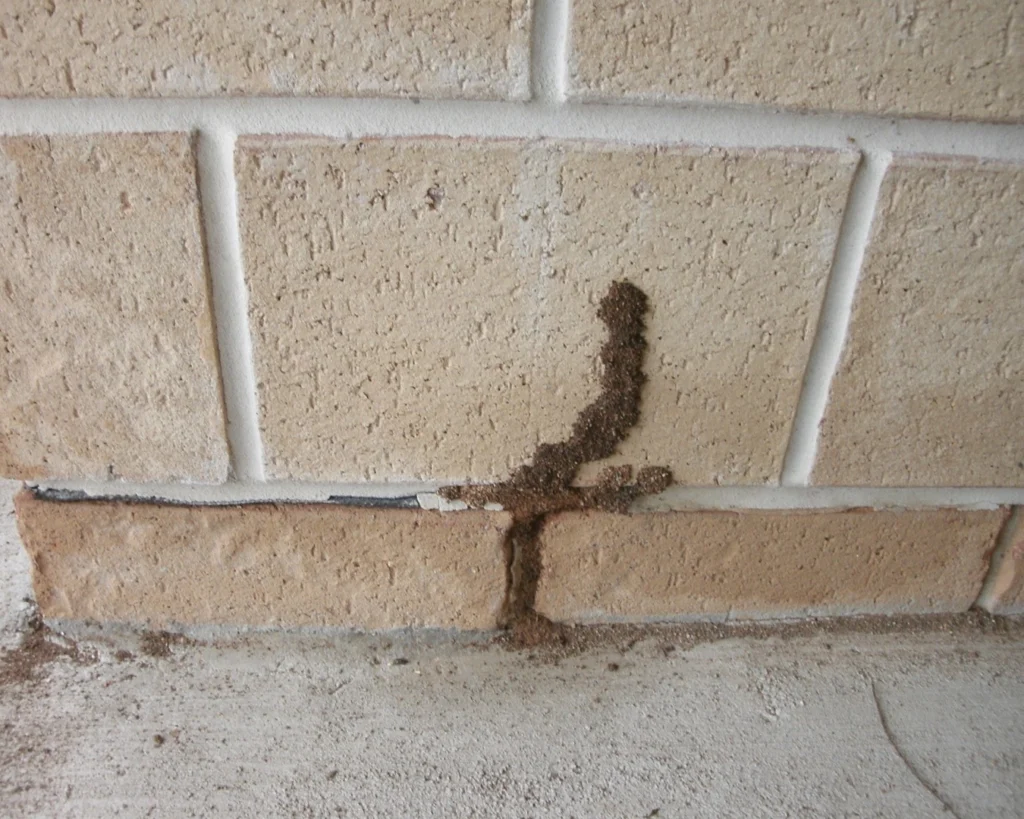 A termite mud tube attached to the side of a brick wall, originally beginning from the concrete slab, allowing termites to bridge over the installed termite barrier
Mud tubes around the outside of your home
One of the telltale signs of subterranean termite activity is the presence of mud tubes, also known as shelter tubes. Termites create mud tubes to stay protected while navigating between their nests and food sources. These tubes, about the diameter of a pencil, help termites maintain a humid environment once they emerge from the ground.
Mud tubes are a crucial survival tool for termites and are often found along walls, foundations and other surfaces close to the ground. This behaviour is a key indicator that subterranean termites are present nearby and that there could be activity within the structure of the building.
The image above shows a mud tube attached to the side of a brick wall. Termites have managed to find a small gap in the concrete slab and have then built a mud tube to protect themselves while looking for an entry point into the wall.
Spotting mud tubes early on can help you act before termites cause severe structural damage to the building. However, do not remove any mud tubes you find, as removing them will only disturb the termites and make the problem harder to treat.
Are mud tubes an indication of termite bridging?
Mud tubes found on external walls or along exposed slab edges may indicate that termites have bridged an installed termite barrier.
Termite bridging occurs when conditions around a property allow termites to create a pathway over or around a termite management system. Conditions that can contribute to termite bridging include:
- Soil or mulch built up above the visual inspection zone of the termite barrier
- Abutting timber constructions, such as decks or verandas, built across inspection zones
Learn more about what termite bridging is and how you can help prevent it.
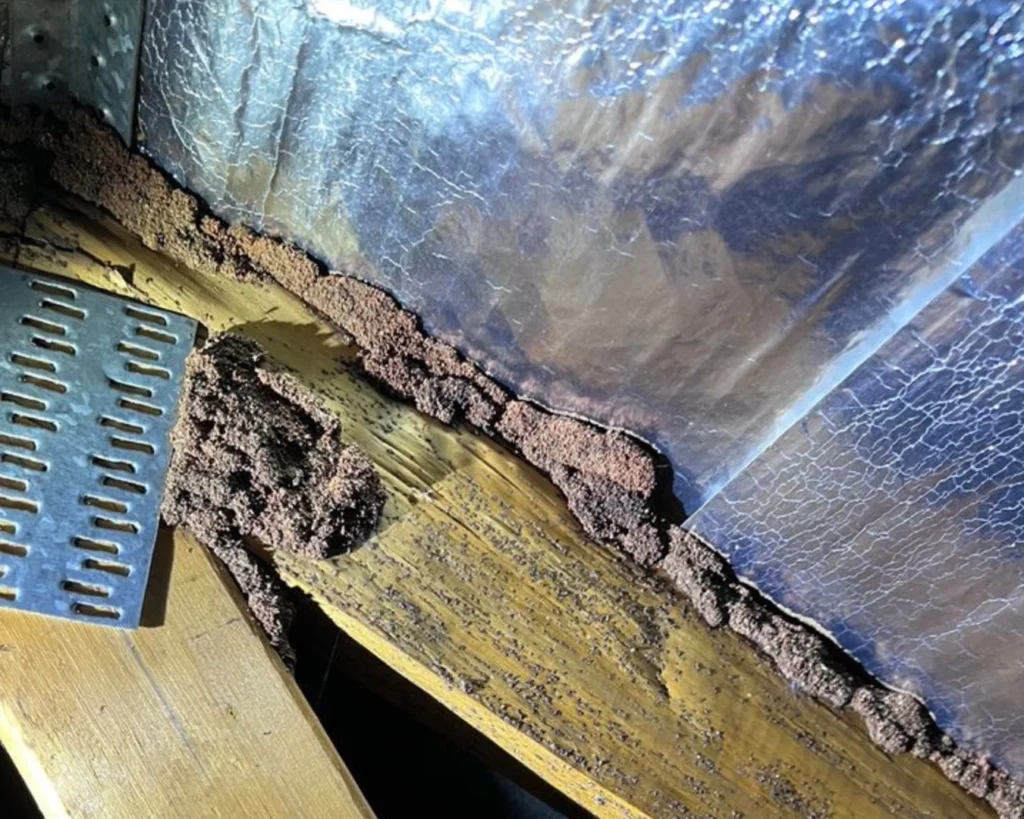 Cracks and crevices in structural roof timbers filled with mud by termites
Mud buildup in the cracks of timber
When making their way through timber, termites will fill in any cracks or holes that expose them to external conditions with mud. This behaviour allows them to regulate their temperature and survive while they destroy your home.
You will usually find cracks filled in by termites around skirting boards, architraves and door frames. If you discover this behaviour, avoid disturbing any mud or damaged timber you see, as it could lead to the termites moving and further infesting your home.
The image below shows pronounced mudding on structural timber beams inside a roof cavity. Termite mudding isn’t alway this obvious and can be often quite subtle.
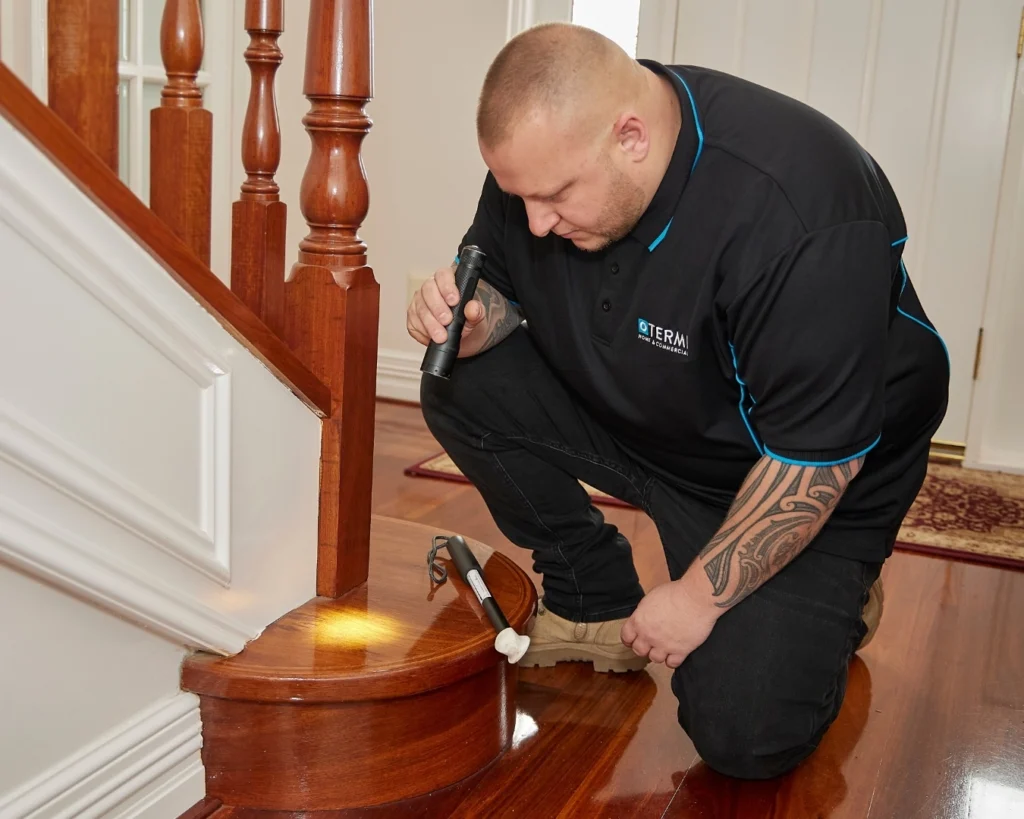 Pest control technician inspecting a timber floor for termite activity
Timber that sounds hollow
Termites consume wood from the inside out, leaving a thin outer layer of timber or paint on the surface, giving the appearance that nothing is wrong. When tapped, affected timber produces a distinct hollow sound, which structurally sound timber should never make.
In the video below, Termitrust Pest Control Dubbo technician, James, inspects the roof cavity of a home for termites. Apart from the sutble mudding between timbers, everything appears to be fine.
However, a light squeeze of the timber truss quickly reveals that termites have eaten the timber out, leaving it structurally unsound. Upon further inspection of the roof cavity, James discovered that termites had compromised many other structural timbers inside this roof cavity.
Note: Invasive termite inspection methods, like the squeezing of damaged timbers in the video below, are rarely used. Your technician will ask for your permission before they conduct any invasive inspection techniques.
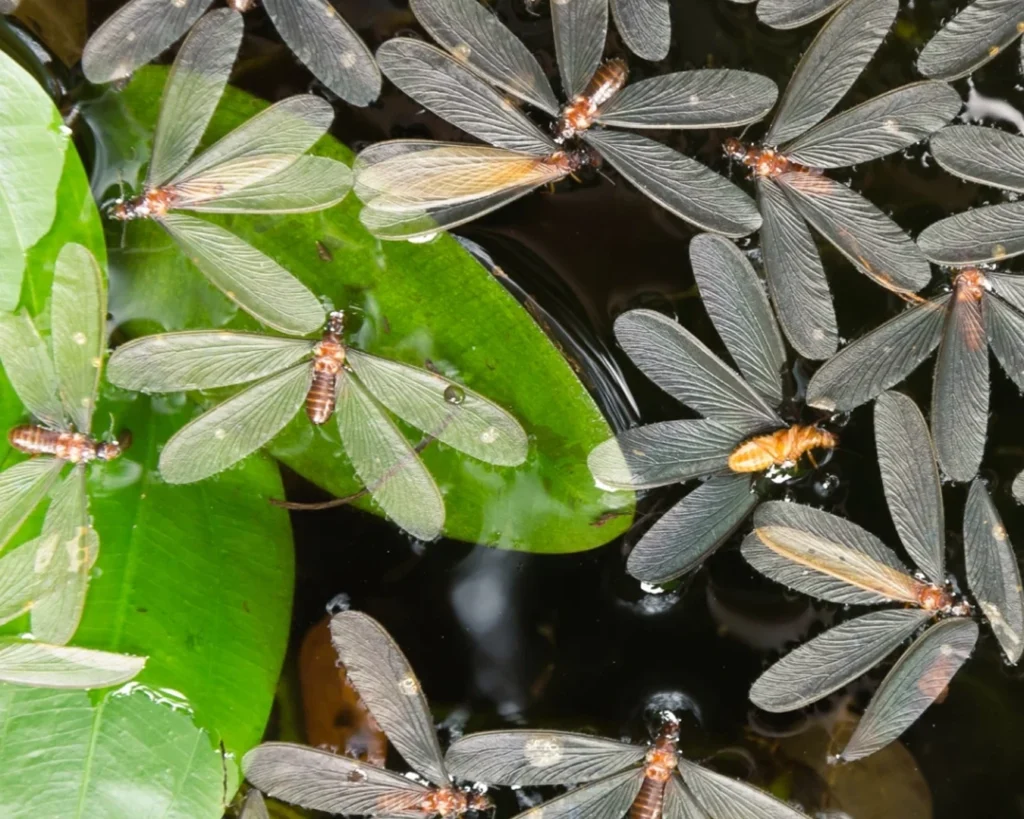
Dead flying termites (alates) floating on a body of water
Piles of dead flying termites or discarded wings
Flying termites, or more correctly, termite alates, are responsible for establishing new termite nests. When conditions are just right, alates fly out of a mature nest in their thousands to find a mate and a suitable location to start a new nest. This is typically referred to as swarming.
All flying termites shed their wings shortly after flight, and those that don’t form a mating pair will perish. In Australia, swarming occurs in the warmer months of spring, autumn and summer, particularly before storms when humidity is high. Most flying termites will perish before they can find suitable conditions to start a new termite nest, leading to groups of dead flying termites or discarded wings being found around homes.
Finding dead flying termites or discarded wings is one of the strongest warning signs that a mature termite nest is nearby, as these termites typically only fly around one hundred meters from the nest they originated from.
Piles of dead flying termites or discarded wings can typically be found near windowsills and doors, in bodies of water and beneath outdoor light fixtures.
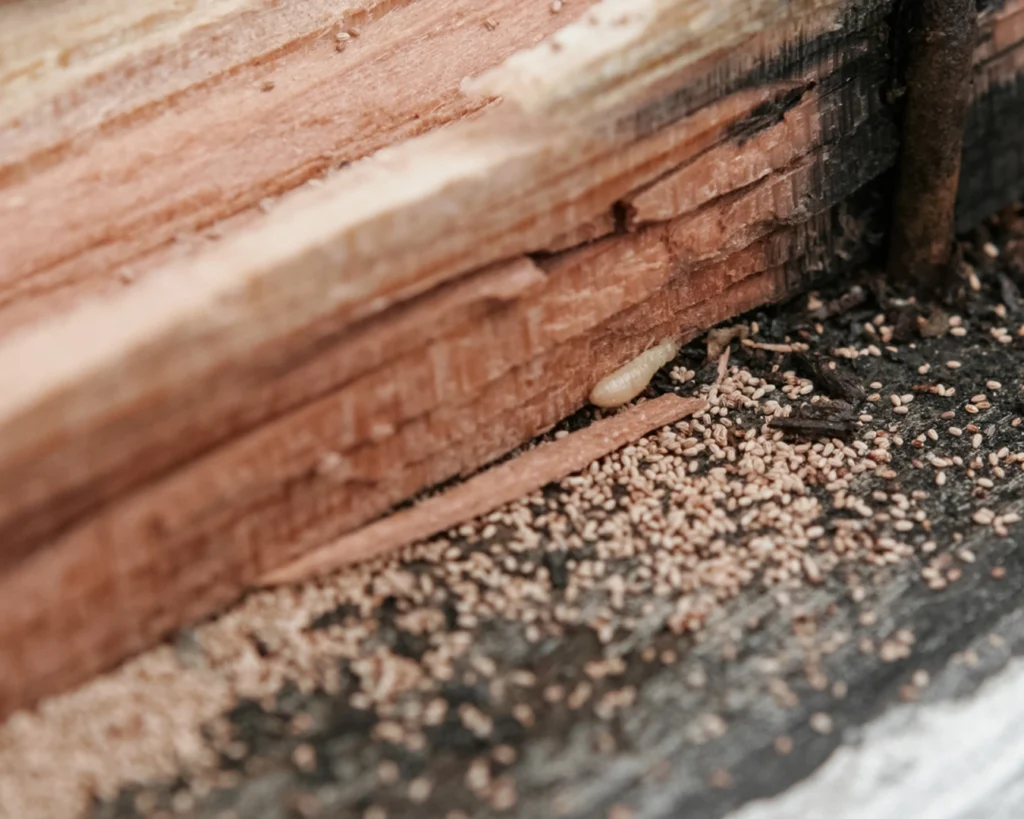 Termite droppings (frass) next to damaged timber
Finding termite droppings (Frass)
Termite droppings, known as frass, is the poop of termites. Frass usually accumulates near infested areas of a home, forming tiny mounds that look like small piles of sawdust or dirt.
Termites may push out frass from damage timber after it has accumilated for a period of time. This means that seeing termite poop isn’t an indicator of the infestation being new, but rather, being already established for some time.
Termite excrement is typically oval-shaped and can be light beige to black in colour, depending on the type of termite and the species of wood the termites have eaten.
Additional signs of termite infestation
In addition to these common signs of termite damage above, the following indicators may also hint at termites being present in your home:
-
Bubbling, cracking or peeling paint: Bubbling, cracking or peeling paint can occur on walls and timber trim if termites have hollowed out the wood underneath
-
Uneven Floorboards: Floorboards that are inconsistent or uneven could suggest termite damage has occurred
-
Cracked or distorted walls and ceilings: Termites tunnelling through wooden structures can cause parts of walls or ceilings to warp or crack
-
Faint tapping or clicking sounds: Termite soldiers can produce faint tapping or clicking sounds to signal danger to the colony. In a quiet environment, you may hear them if you place your ear close to an infested area
-
Electrical short circuits or damage to wiring: Termites are often drawn to the warmth around electrical fittings and wiring. If your home experiences frequent short circuits or if you notice damaged or muddy electrical fittings, this could be a result of termite activity
Conclusion
Recognising the early signs of termite infestation can be the difference between minimal damage and costly repairs to your home. And don’t forget… termite damage isn’t covered by your home and contents insurance!
Common signs of termite damage can include mud tubes, mud patching up cracks in timber, hollow-sounding timber, piles of dead flying termites or discarded wings and termite droppings (frass).
Being vigilant and aware of these signs can help homeowners detect a potential termite infestation early on, saving money and reducing the stress of repairing termite damage out of pocket.
If you have discovered any of these common signs of termite infestation or something unusual that you are concerned about, contact your local Termitrust team to schedule a termite inspection.
Our experienced technicians are ready to assess, identify and help eliminate termites if they are discovered inside your home.
Frequently Asked Questions
Q. How do termites enter homes?
A. Termites can enter homes through cracks in your concrete slab, through gaps around utilities that penetrate through your slab, or by termites building mud tubes from untreated soil, that bridge to a wooden structure.
Q. What do termites eat?
A. Termites eat cellulose found in wood and plant materials. They can eat paper, cardboard and many other cellulose-rich materials commonly found in homes and around properties.
Find out more about what termites eat here.
Q. What should I do if I suspect termite activity in my home?
A. Avoid disturbing any termites or signs of termites that you find, as this can worsen the termite infestation. Immediately contact a licensed pest control company to conduct a termite inspection, so that you can uncover the full extent of the termite infestation.
To learn what a termite inspection involves, how you should prepare for one and more, read our helpful comprehensive guide to termite inspections.
Q. How do I make sure termites are not in the property I’m purchasing?
A. The most reliable way to determine whether termites are present in a property you are considering to purchase is to arrange a pre-purchase timber pest inspection with a licensed pest control company.
During the inspection, a technician will assess all accessible areas of the property for active termite and timber pest activity, previous damage and conditions that may increase the risk of infestation. Based on the report you receive, you’ll be able to make an informed decision about the purchase.
Learn more about pre-purchase timber pest inspections in our comprehensive guide.